Posted by admin on February 9, 2009 under Misc., News |

Basement Tempo Advanced
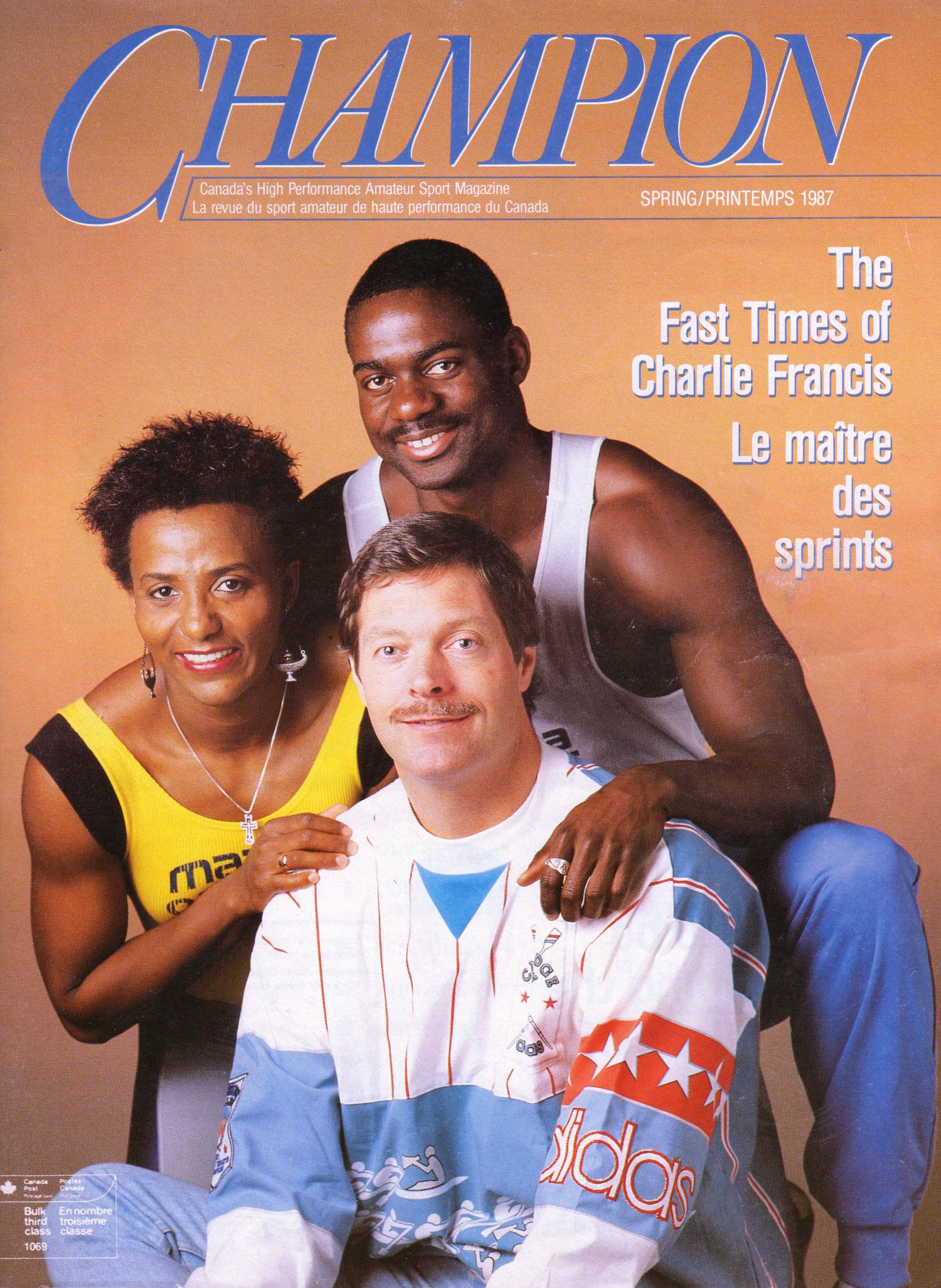
The video addresses many of the complaints from Athletes and Coaches alike about problems resulting from lack of facilities and poor weather conditions. While most sprinters chase the sun, many have to contend with the harsh reality of bad weather and lack of facilities. Charlie’s former squad certainly fell into this category, yet achieved international success and perhaps this is why Charlie does not accept such complaints as a justifiable excuse for poor preparation. In this video series Charlie and wife Angela Coon, former Canadian National Team 100m Hurdler, present several general conditioning workouts for athletes of different levels that can be done almost anywhere. This is the advanced segment, which runs 1hr 41minutes and includes in depth commentary from both Charlie Francis, and Angela Coon.
Tags: athletic ability, Athletics, better athletes, Charlie Francis, elite athletes, enhancing speed, human potential, learning from experience, physical ability, Preparation, range of motion, speed, Speed Development, Speed Training, Sprinting
Posted by admin on January 19, 2009 under News |
The Host City Contract for the 1st Winter Youth Olympic Games in Innsbruck in 2012 was signed in the Tyrolean capital by IOC President Jacques Rogge, the Host City and the Austrian National Olympic Committee (NOC) authorities. President Rogge, accompanied by an IOC delegation including IOC administration representatives, visited several competition venues where the events will be held in 2012. He also met a group of young students who appeared on the promotional video clip for the Innsbruck bid. “We are glad to be back in Innsbruck where the extraordinary 1964 and 1976 Olympic Winter Games were staged”, said the IOC President at the press conference.
Given the short preparation time (three years), the IOC President underlined that Innsbruck was a strong partner, in terms of already existing first-class venues; Innsbruck’s high degree of competence in organising international sports events; the enthusiastic population that has an excellent understanding of winter sports; and the full support of the local, regional and national authorities.
Moreover, the Innsbruck 2012 bid excelled through its good understanding of the cultural and educational component of the Youth Olympic Games. The event will thus offer an excellent platform to create a true community between the youth of the world and the participants by learning and sharing experiences. Specific cultural and on line activities will spread the fever beyond the Austrian borders. “Innsbruck can count on the IOC and particularly on the Coordination Commission under the leadership of IOC member Gian-Franco Kasper,” added President Rogge.
See more photos
The 1st Winter Youth Olympic Games will encompass all seven Olympic winter sports: bobsleigh (bobsleigh, skeleton), biathlon, curling, ice hockey, luge, skating (short-track, speed skating, figure skating) and skiing. The latter will feature Alpine, cross-country, freestyle, Nordic combined, ski jumping and snowboarding. Details of the events and qualification systems will be elaborated in close relationship with the International Olympic Winter Sports Federations in the near future.
###
For further information, please contact the IOC Communications Department, Tel: +41 21 621 60 00, email:
pressoffice@olympic.org
Posted by admin on under News |
A month after the election by the IOC members of Innsbruck as the host city of the first Winter Youth Olympic Games in 2012, the IOC President today announced the appointment of Mr Gian-Franco Kasper, an IOC member and President of the International Ski Federation (FIS), as the Chairman of the Coordination Commission for the 1st Winter Youth Olympic Games, the group of representatives from the IOC and the Olympic Movement who will be monitoring the Youth Olympic Games preparations and guiding the Innsbruck Organising Committee over the next three years.
Mr Kasper has great experience of Games coordination as a member of the Coordination Commissions for the XIX Olympic Winter Games in Salt Lake City in 2002 (1999-2002), XX Olympic Winter Games in Turin in 2006 (2000-2006), XXI Olympic Winter Games in Vancouver in 2010 (since 2003) and the XXII Olympic Winter Games in Sochi in 2014 (since 2007).
Gian-Franco Kasper will accompany IOC President Jacques Rogge during the inaugural IOC visit to Innsbruck this week on 14 and 15 January.
# # #
For further information, please contact the IOC Communications Department, Tel: +41 21 621 60 00, e-mail:
pressoffice@olympic.org
Posted by admin on under News |
Preparations for the Singapore 2010 Youth Olympic Games (YOG) gained
further momentum at the end of the year with the launch of two new programmes: the Olympic Education Programme (OEP) and Friends@YOG. Since Singapore won the bid to host the 2010 YOG, schools have been actively organising various activities to intensify the YOG buzz. These two new initiatives will further lay the foundation for a successful and memorable YOG event in 2010.
Friends@YOG
Under “Friends@YOG”, each of the 360 Singapore schools will be “twinned” with one of the 205 National Olympic Committees. It will be a fun and exciting learning journey for students as they cultivate a global mindset through the forging of international friendships, learning about other countries’ cultures and developing respect for cultural diversity.
Friends@YOG aims to achieve the objectives of:
• building international friendship through collaboration and cultural exchanges among young people;
• promulgating the Olympic values of excellence, friendship and respect;
• cultivating among young people a global outlook, a passion for sport and good
habits that are part of a healthy lifestyle.
Olympic Education Programme
With the launch of the Olympic Education Programme (OEP), youngsters in Singapore will have more opportunities to experience and embrace the Olympic values of excellence, friendship and respect. They will also get to better understand the diverse cultures of the world. All schools will receive the specially designed “Living Olympism” Education Resource Package as part of the associated teaching materials. Teachers can draw on the various interesting ideas in the package to develop innovative learning activities for students to acquire knowledge about the Olympic Games and understand the Olympic spirit in a fun way.
Posted by admin on December 20, 2008 under News |
The Olympic Review Magazine offers the news and activities of the IOC as well as in-depth feature pieces on topics and issues that matter to the Olympic Movement.
First published in 1894 the year the IOC was founded, the Olympic Review is now an 84-page full-colour glossy magazine that is issued quarterly.
Discover here the E-zine version. Leaf through this electronic version by placing your mouse on the white arrows on the left and right of the pages. You can also zoom in or out, search for key words or go directly to a specific page by using the Thumbnails feature in the top left hand corner or the sliding rule at the base of the screen.
Truly Exceptional Games - December 2008
Olympic Review looks back at the unforgettable moments of the 2008 Beijing Olympic Games
Meeting of Cultures - June 2008
Beijing 2008 provides the catalyst for the people of China to welcome athletes, spectators and billions of TV viewers worldwide.
Heralding the Games - March 2008
Olympic Review travels to Beijing to share in the mounting excitement and anticipation as the 2008 Games draw ever closer and the preparations continue in both sporting and cultural arenas.
Zero Tolerance - December 2007
Why Time is Running Out For Drug Cheats: A special report on how the IOC, directed by its policy of Zero Tolerance, is setting the agenda in the sports movement’s fight against doping.
View here
Going Green - September 2007
How the Olympic Movement positions sport as a vital contributor to environmental protection and sustainability.
Posted by admin on under News |
Innsbruck will host the 1st Winter Youth Olympic Games in 2012. The result was unveiled today by IOC President Jacques Rogge at the IOC headquarters in Lausanne. Innsbruck (Austria) beat Kuopio (Finland) in the final by 84 votes to 15. “We had two outstanding finalists which were both able to stage the Youth Olympic Games, according to the IOC’s requirements and Innsbruck has won”, declared IOC President Jacques Rogge after the announcement.
Following the 1st Summer Youth Olympic Games in Singapore in 2010, Innsbruck will be responsible for staging the 1st Winter Youth Olympic Games, with approximately 1,000 athletes, aged 14 to 18.
The competition schedule will be based on the seven sports included in the Vancouver 2010 programme (biathlon, bobsleigh, curling, ice hockey, luge, skating and skiing) with a limited number of disciplines and events.
As a next step, a Coordination Commission will be designated by the IOC President to accompany Innsbruck throughout the three years of preparation. “We are fully aware that this is a very short period, but we are extremely confident that Innsbruck can match the expectations of both the IOC and the athletes, including an attractive Culture and Education Programme, which is an integral part of the Youth Olympic Games experience”, underlined Jacques Rogge.
The Youth Olympic Games are the flagship of the IOC’s determination to reach out to young people. These Games will not only be about competition, they will also be the platform through which youngsters will learn about the Olympic values and the benefits of sport, and share their experiences with other communities around the globe. “We are looking forward to joining in the celebration in Innsbruck in 2012,” Jacques Rogge added.
Posted by admin on December 2, 2008 under News |
The IOC completed yesterday its week-long review of the Beijing 2008 Games to ensure that London and other Games Organising Committees benefit from the lessons learned in Beijing. The IOC Official Debriefing of the Beijing 2008 Games examined all planning and operational aspects of the Beijing Games to highlight best practices, as well as the challenges that were encountered.
Distinct Personality
“We’re delighted that the Olympic Games are returning to Great Britain, the birthplace of modern sport,” IOC President Jacques Rogge said. “Every Olympic Games has a distinct personality. The successful Games in Beijing were unique in many ways. London has its own unique assets that will ensure the success of the 2012 Games as well.” Rogge has made knowledge transfer a top priority during his tenure as IOC President. “The 2008 Games set new standards for organisation, venues and athletic performances, but we can always improve,” Olympic Games Executive Director Gilbert Felli said. “I’m confident that the London organisers will host a first-class event with a uniquely British atmosphere.”
Beijing Debriefing
Bringing together around 900 participants, the IOC Official Debriefing of the Beijing 2008 Games took place from 24 to 27 November 2008 in London. This event, which was attended by members of the
Beijing 2008,
Vancouver 2010,
London 2012 and
Sochi 2014 Organising Committees (OCOGs), as well as representatives of the 2016 Candidate Cities and other Games stakeholders, gave these future Games organisers the chance to learn from the experience and knowledge gained by their Beijing counterparts during their seven years of preparation. Comprising two plenary sessions, eight stakeholder sessions and 18 functional area workshops, the event looked at the planning, operational and technical elements of organising an Olympic Games, such as sport, accommodation, transport, culture, education and logistics. The debriefing also addressed the various stakeholders’ experience of groups at the Games like athletes, spectators, workforce and the media. A full technology debrief of the Games was also held in London from 20 to 22 November 2008.
The OGKM Programme
The Beijing Debriefing is a key component of the IOC’s Olympic Games Knowledge Management (OGKM) programme, which consists of three main sources: services, personal experience and information. The services include workshops, seminars and a network of experts with Games experience on a range of Olympic topics that the OCOGs are able to call upon throughout their lifecycle. The OCOGs are also able to gain personal experience on Games preparations and operations through the Games-time observers’ programme, the official Games Debriefing and a secondment programme, which allows staff members from future OCOGs to work on the current edition of the Olympic Games. The final element of OGKM is information, which includes elements like the Official Games Report, technical manuals, knowledge reports, a range of useful documents and publications and the IOC’s visual transfer of knowledge of photos and films. All this information is available to the OCOGs through an extranet that is managed by the IOC.
Posted by admin on November 7, 2008 under News |
The Coordination Commission of the 1st Summer Youth Olympic Games concluded its first visit to the host city Singapore today. Eight months after the host city announcement on 21 February 2008, the Singapore Organising Committee (SYOGOC) has already established all the foundations necessary to stage the Games in 2010. “We are impressed with how the preparations have advanced. SYOGOC is very much on track”, said Sergey Bubka, Chairman of the Coordination Commission, at the end of the visit. “We can count on the full support of the whole of Government and all Singaporeans, as well as on a highly dynamic team committed to serving our vision for these Games”, concluded SYOGOC Chairman and IOC Executive Board member Ser Miang NG.
The Coordination Commission had the opportunity to visit various venues that will stage the 200 events in 26 sports. A master plan proposal for the venues for the 1st Youth Olympic Games was put forward by SYOGOC for approval.
The seven members* of the Coordination Commission were highly impressed by the Youth Olympic Village based at the Nanyang Technological University (NTU) campus. This site offers not only the capacity to host the 5,000 athletes and team officials expected to participate in the Games, but also training facilities for many sports and excellent facilities for the culture and education programme.
The Organising Committee emphasised in its presentations the importance of the culture and education programme. In order to match the different origin and languages of all participants, most of these activities would be centred on experience-based education, allowing the athletes to experiment and learn at the same time. The project also includes well targeted communications initiatives, including a specific youth website and other digital applications to reach out to young people all over the world.
”Presentations were of a high standard and we can return home with the feeling that our partners in Singapore have well understood the mission entrusted to them, and that they can cope with the considerable time pressure. We just have to keep up the same pace and vigilance for the remaining 22 months until the opening of the inaugural Youth Olympic Games”, concluded Sergey Bubka.
+++
Notes to Editors:
The Youth Olympic Games in Singapore, to be held between 14 and 26 of August 2010, will bring together 3,500 athletes between 14 and 18 years of age from all 205 National Olympic Committees to compete in the 26 sports on the London 2012 Olympic Games programme. fully fledged education programme will raise participants’ awareness of the Olympic values and topics like healthy lifestyles and the fight against doping. A number of communications initiatives will link the youth of the world with the event. A culture programme will ensure a festive and pleasant atmosphere within the host city.
*Members of the Coordination Commission: Sergey Bubka, IOC member and Chairman; Nat Indrapana, IOC member; Syed Shahid Ali, IOC member; Raja Randhir Singh**, IOC member; Frank Fredericks, IOC member and Chairman of the Athletes’ Commission; Rania Elwani**, IOC member; Guido de Bondt, NOC representative; Andrew Ryan, IF representative; and Gilbert Felli, Olympic Games Executive Director. The Coordination Commission is the group of representatives from the IOC and the Olympic Movement who will be monitoring the Youth Olympic Games preparations and guiding the Singapore Organising Committee.
(** not present at the 1st Coordination Commission meeting in Singapore)
+++
Posted by admin on under Misc. |
As coaches, what can we take away from Usain Bolt’s effort in the Olympic final, running 9.69 with a mini-celebration in the last 15 meters? What do we know about his training and preparation? Also, does this mean that we should be recruiting taller athletes for the 100m? (more)